
Did you know the Pilates method began on the mat, and the equipment came afterward to support or challenge what the body does there.
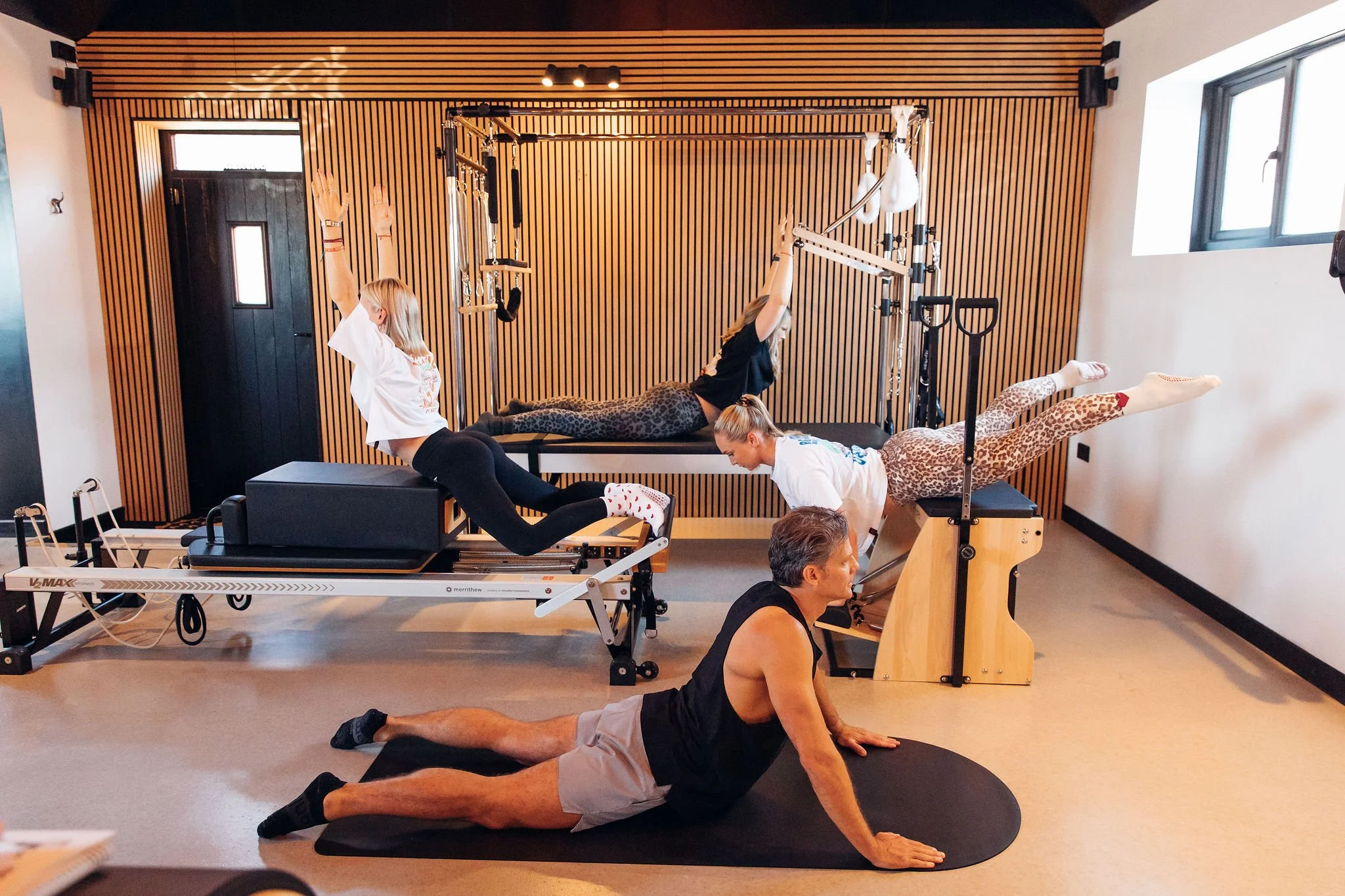
An example of the swan on 4 different pieces of equipment, including the Mat!
Who Actually Invented Pilates
Joseph Hubertus Pilates was born in Mönchengladbach, Germany, in 1883. He was reportedly a sickly child, and by his own account spent his youth trying to out-engineer his own weak body, studying gymnastics, boxing, martial arts, skiing, and anatomy along the way. He later moved to England, where he worked as a boxer and circus performer, performing as a "living Greek statue" and picking up training ideas from the acrobats he worked alongside.
When the First World War broke out, Joseph was interned as a German national at Knockaloe camp on the Isle of Man, one of the largest internment camps in the British Isles, holding around 23,000 men. He spent roughly three and a half years there.
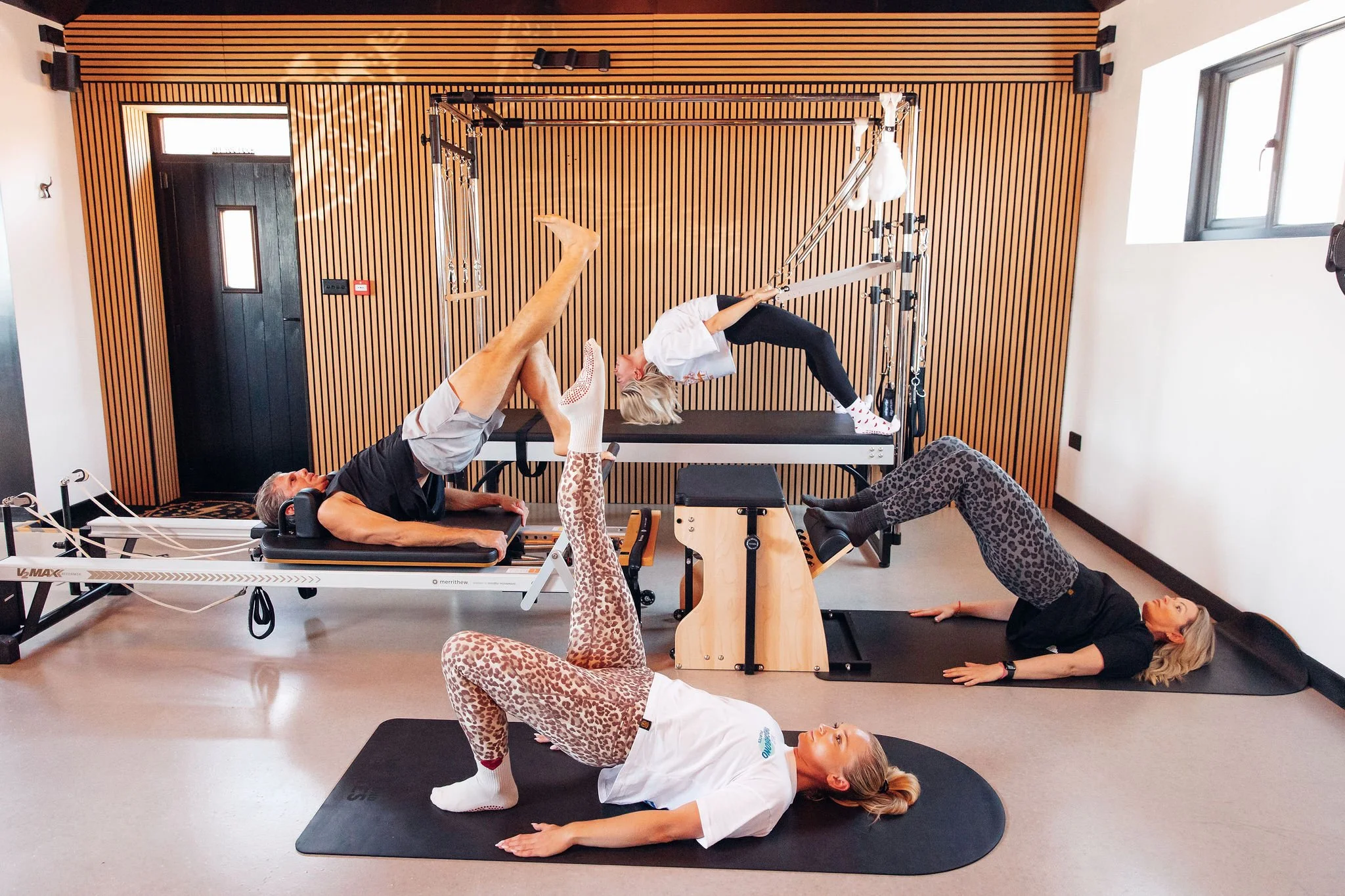
The team demonstrating hip bridges across the apparatus!
What Contrology Actually Is
It's during that internment that Joseph began refining what he called Contrology, his own term for the method the world would later name Pilates after him. Contrology was built entirely around the idea that the mind should consciously direct every single movement of the body, rather than letting muscles move on autopilot. Joe famously said Contrology is a complete coordination of the body, mind and spirit. He taught it to fellow internees using nothing but bodyweight and floor work, no equipment required, and by his own account it kept the men who practised it noticeably fitter than when they arrived!
Contrology rests on six principles Joseph considered non negotiable:
Concentration
Control
Centring
Flow
Precision
Breath
He wrote the method up himself in 1945 in a book called Return to Life Through Contrology, still in print, and still the most direct source if you want the method from Joseph rather than from a modern reinterpretation of it.
Why the Mat Still Matters
Every piece of apparatus in a Pilates studio was designed to build on the mat work, not replace it. For example, the reformer adds springs with a base of support (the carriage). The chair adds springs too, but strips away that base of support - with lots of standing movements - so tough balance and control work. The Cadillac/Tower is a bit of both, with multiple spring points and some pretty fun upside-down work when you're on the Cadillac. The ladder barrel drops the springs altogether with lots of spinal flexion and extension work! But the mat is still considered the OG. 34 movements, you and your body weight. No spring helping or challenging you, no strap holding you up. Just you, the floor, and Joseph's original method, functionally unchanged in over a century
If you've only ever trained on the the apparatus going back to a proper mat class can be genuinely humbling, in the best way.
Spoiler - we hope to be adding mat classes to our timetable soon!