
Footwork. Why it is so important.
In STOTT Pilates, the Footwork series performed on the Reformer is a fundamental starting point for building strength, alignment, and control throughout the entire body. Using the resistance of the springs and the support of the carriage, these exercises create a controlled environment to develop proper movement patterns from the ground up. Often underestimated, footwork forms the foundation of effective Reformer practice by targeting the feet, legs, and core while reinforcing optimal alignment and joint stability. Footwork develops lower body strength and control, and it also improves posture, balance, and coordination in everyday life. In today’s modern world, where many of us spend hours sitting or wearing restrictive footwear, training the muscles of the feet and legs against resistance is more important than ever for preventing injury, enhancing mobility, and supporting long-term functional movement.
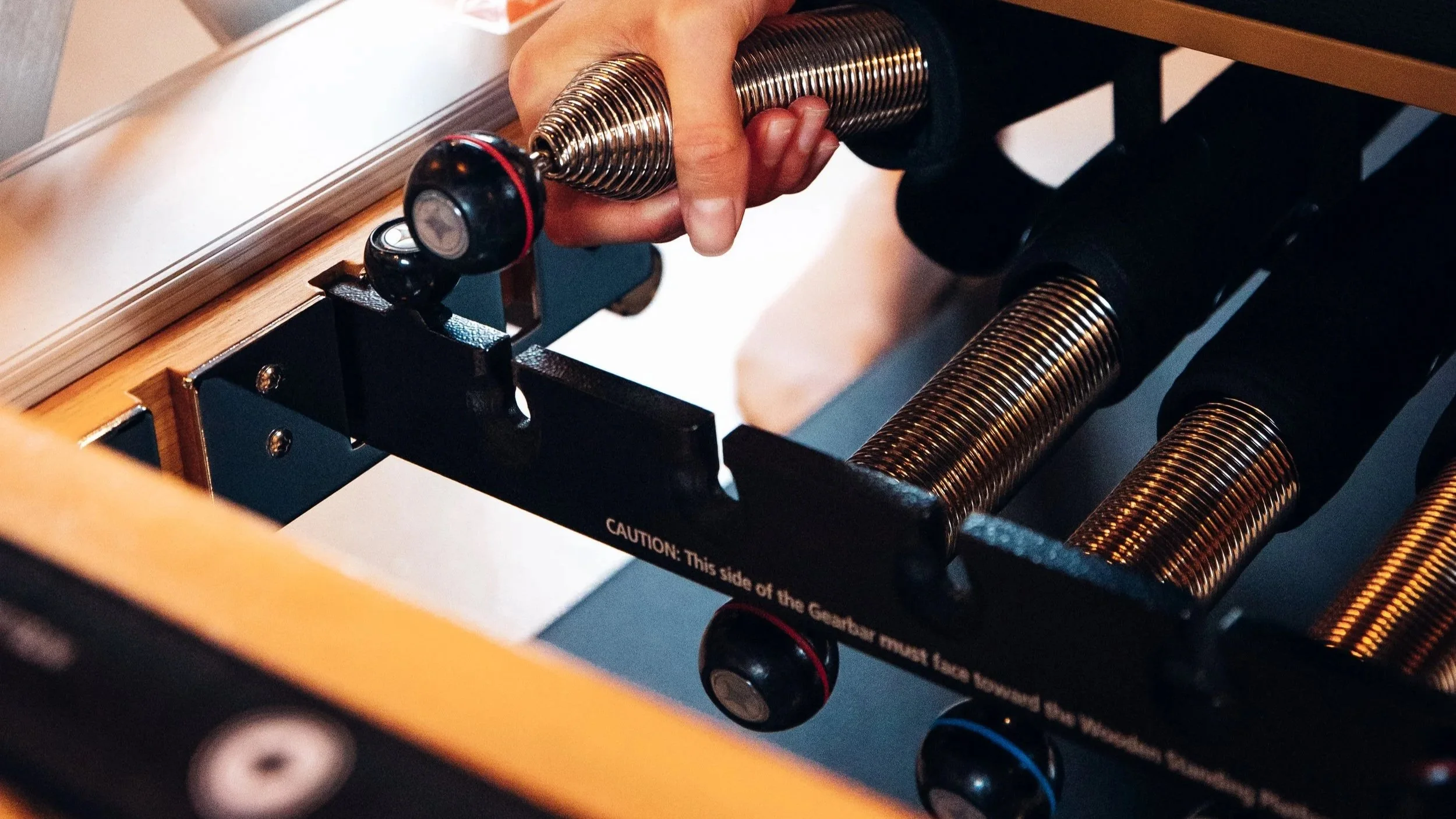
Spring selection is key. Your instructor will cue you, but heavy isn’t always appropriate or harder.
Toes Apart, Heels Together
Performed on the footbar, this position encourages external rotation from the hips while maintaining neutral pelvic alignment against the carriage. The exercise primarily activates the inner thighs (adductors), glutes, and deep hip rotators, while also engaging the quadriceps and calves as you press the carriage away and return with control. We use this movement to improve hip stability and alignment, which is crucial for efficient walking and standing mechanics. The added resistance of the Reformer helps build strength evenly through both legs, counteracting the effects of sedentary lifestyles where compromised hip stability often leads to knee or lower back strain.
Wrap Toes on the Bar
This variation involves wrapping the toes over the footbar (“like a budgie clinging onto its perch” being my favourite cue!), using the spring resistance to challenge foot articulation and control as the carriage moves. The calves, plantar fascia, and intrinsic foot muscles are heavily engaged, alongside the hamstrings and glutes to stabilise the movement. This exercise is essential for developing strong, responsive feet, a quality often neglected in modern footwear. The Reformer provides feedback and resistance that helps retrain proper foot mechanics, supporting balance, gait efficiency, and shock absorption. This is why you’ll sometimes find the instructor holding your heels still in space: to ensure the ankle is working rather than compensating elsewhere.
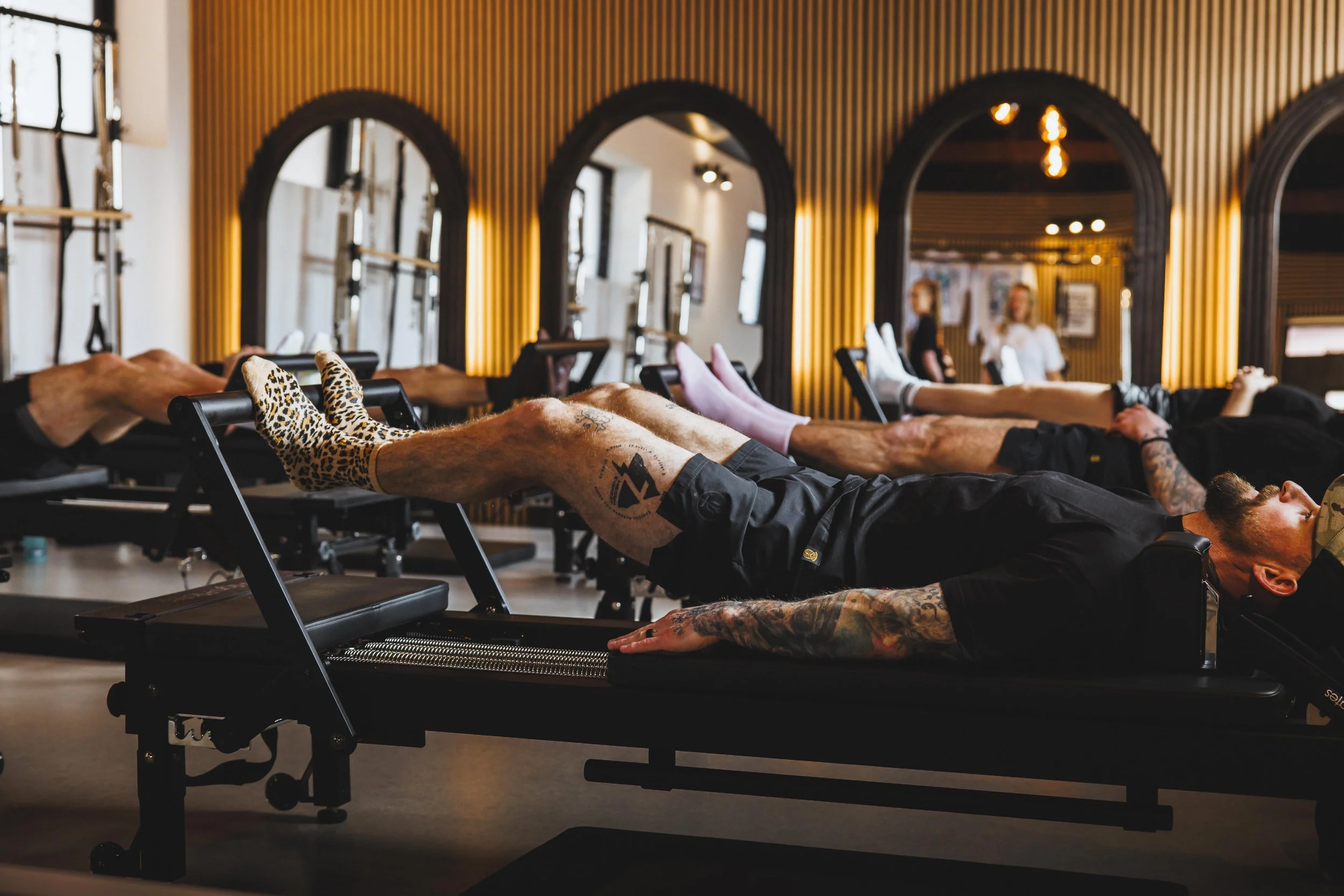
Toes apart, Heels together….With leopard print
Heels on the Bar
With the feet flexed (dorsiflexion) and placed on the footbar, this variation uses spring resistance to emphasise the posterior chain, particularly the hamstrings and glutes, while also engaging the tibialis anterior along the front of the lower leg. The moving carriage challenges control, requiring consistent core activation to maintain pelvic stability. This position helps restore balance between the front and back of the legs, which is often disrupted by prolonged sitting. Strengthening the posterior chain in this supported but resisted environment improves posture, reduces strain on the lower back, and enhances functional movements such as bending, lifting, and walking uphill. A particularly mean instructor might place their hand across your toes to stop you from working into plantar flexion, essentially just rocking your toes forwards and backwards over the bar.
Half High Heel
Performed with the heels lifted (kitten heels or sensible work shoes, not Louboutins!). This variation uses spring resistance to strengthen the calves (gastrocnemius and soleus) while challenging ankle stability and alignment through the kinetic chain. The quadriceps and intrinsic foot muscles work together to control the carriage as it moves in and out. This movement closely mimics real-life activities like pushing off during walking or balancing in heeled shoes. Training in this position on the Reformer enhances ankle strength and resilience, which is vital for balance and injury prevention, especially given that uneven surfaces and inactivity can weaken these stabilising muscles.
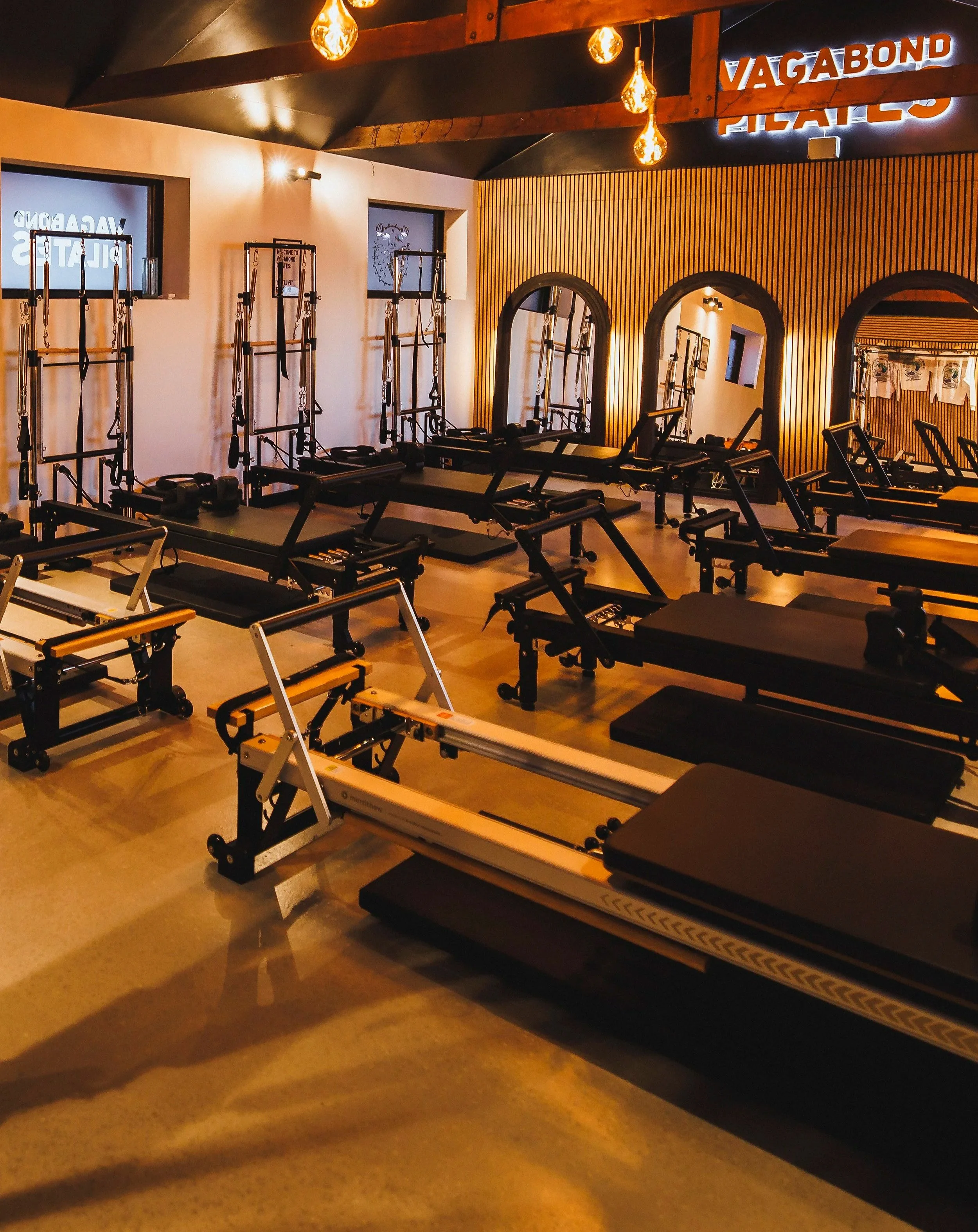
Your next to another person-not a competitor. Footwork isn’t a race.
Heel Lower and Lift
Using the springs for resistance and feedback, this dynamic movement focuses on controlled ankle articulation as the heels lower beneath the bar and lift back up. It strengthens the calves while lengthening the Achilles tendon and plantar fascia, with the carriage adding an extra challenge for control and alignment. Feels nice on the first four reps and then feels spicy! Heel lowers and lifts are key for improving circulation, ankle mobility, and elasticity in the lower limbs. We often call the calves the 'pumps' of the legs. On the Reformer, this becomes a highly controlled and effective way to retrain movement patterns, translating into smoother, more efficient walking and better shock absorption. In our increasingly sedentary lifestyles, maintaining this strength and mobility is essential to prevent stiffness, reduce injury risk, and support long-term joint health.
We particularly love footwork for the few minutes it gives to centre yourself for class. To forget the kids, husband, wife, work, dog, or horrible traffic to get to class. It gives you time to centre your breath, find the neutral positions we love so much, and to find the much needed flow many of us require to clear the mind and focus. So while some people may find footwork boring we call it our non-negotiable!!